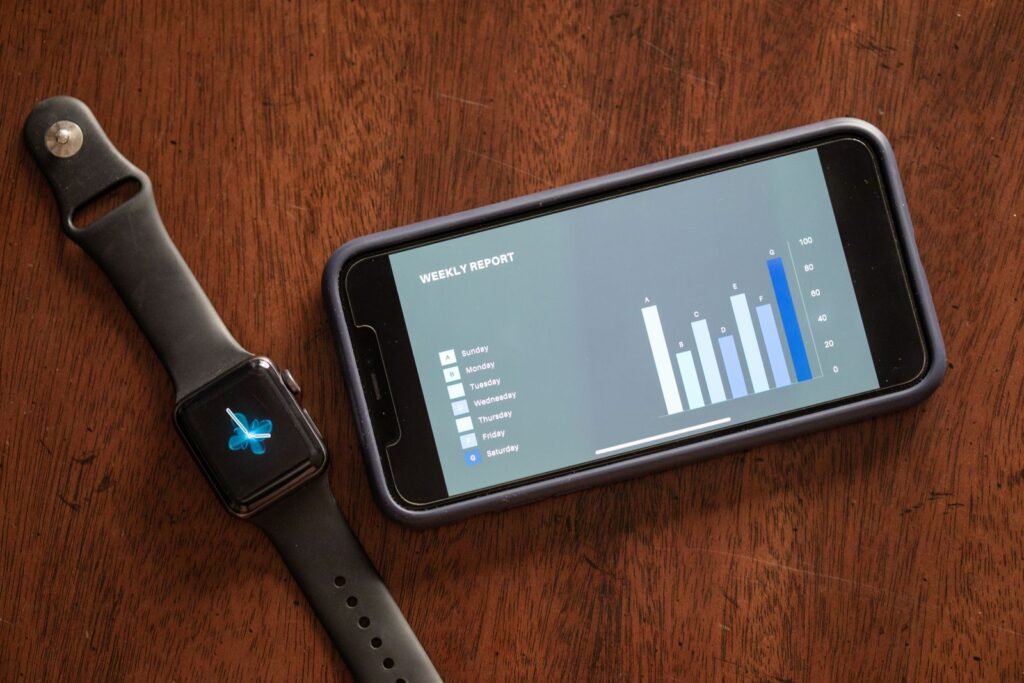
A sleep score can feel strangely authoritative. You wake up tired, check your watch, and see an 84. Or you feel fine, but your tracker labels the night “poor.” Which result should you trust?
Consumer sleep trackers can be useful, but they are better at showing patterns than delivering verdicts. The practical answer to “Are sleep trackers accurate?” is: accurate enough to help you notice some trends, not accurate enough to define your health or explain every rough morning.
Medical Disclaimer: This article is for educational purposes only and is not medical advice. A consumer sleep tracker cannot determine whether you have a sleep disorder. Discuss persistent sleep problems, concerning symptoms, or major changes in your health with a qualified health care professional.
What a Consumer Sleep Tracker Actually Measures
A sleep lab records signals such as brain waves, eye movements, muscle activity, breathing, oxygen levels, and heart rhythm. That overnight test, called polysomnography, gives trained professionals much more information than a typical watch, ring, phone, or bedside sensor.
Your consumer device works with a smaller set of signals. It feeds those signals into an algorithm that estimates when you were asleep, awake, or in a particular sleep stage. The result is a model of your night, not a direct recording of everything your brain and body were doing.
Movement
Most wearable trackers contain an accelerometer that detects motion. Long periods of little movement may be classified as sleep, while more movement may be classified as wakefulness. This can work reasonably well for broad sleep-wake patterns, but quiet wakefulness is a weak spot. If you lie still while worrying for 40 minutes, a device may count some of that time as sleep.
Heart rate and optical signals
Many watches and rings use optical sensors to estimate heart rate and changes between heartbeats. Some add skin temperature, blood-oxygen estimates, breathing-related signals, or sound. Combining signals can improve an algorithm’s estimate, but sensor contact, fit, movement, skin characteristics, circulation, firmware, and the company’s proprietary processing can all affect the result.
Algorithmic estimates rather than direct brain-wave measurement
Consumer devices usually do not measure the brain activity used to score sleep in a lab. They infer sleep stages from indirect signals. That distinction matters most when an app reports precise minutes of light, deep, or REM sleep. The polished graph may look exact even when the underlying number is an estimate.
Which Sleep Metrics Are Most Useful for Trends?
Use the tracker as a long-term notebook. A repeated pattern across several weeks is usually more useful than one score after one unusual night.
Bedtime and wake-time consistency
Bedtime and wake time are simple but actionable. If your schedule shifts by two hours on weekends, or work keeps pushing bedtime later, the graph can make that visible. Look for your normal range rather than demanding the same minute every day.
Estimated total sleep duration
Total sleep time can help reveal whether you regularly leave too little room for sleep. Research comparing consumer devices with lab-based testing shows that performance varies by device and by person. Studies generally find that total sleep time estimates tend to be somewhat more consistent than estimates of wake after sleep onset or individual sleep stages, though accuracy differs across devices, algorithms, and individuals.
Treat a nightly duration as an approximation. If your tracker says 6 hours and 48 minutes, “around seven hours” is a more honest interpretation than assuming every minute is correct.
Night-to-night patterns
Trends become useful when you connect them to context. Did late work, alcohol, pain, a hot room, or an irregular schedule line up with more awakenings? Did a consistent wind-down routine line up with an easier morning? Your own notes can explain what the sensor cannot see.
Which Numbers Deserve More Caution?
Deep sleep and REM estimates
Sleep-stage estimates are tempting because they seem to explain how restorative a night was. Yet performance can differ across stages, devices, algorithms, and individuals. A firmware update can even change the numbers without changing your sleep. Do not try to “fix” one stage based on a single consumer graph.
Single-night scores
A score combines selected metrics using a formula chosen by the manufacturer. It is not a universal medical measurement. Travel, illness, a loose band, charging interruptions, or an unusually active night can distort the result. One bad score is a data point, not a crisis.
“Readiness” or recovery labels
Recovery labels may combine sleep estimates with resting heart rate, heart-rate variability, activity, and other signals. They can prompt you to check in with yourself, but they cannot account for every source of fatigue, mood change, or reduced performance. Your symptoms and real-world function still matter.
Why Your Tracker May Say You Slept Well When You Feel Exhausted
A device can mistake motionless wakefulness for sleep. It also cannot fully measure how pain, mood, medication effects, an infection, breathing disturbances, or another health issue affected your night. You may spend enough hours in bed and still feel unrefreshed.
Do not let a high score talk you out of taking persistent symptoms seriously. If you regularly wake exhausted, struggle to stay alert, or need more context, record how you feel alongside the device data. A simple morning rating such as “refreshed, neutral, or drained” can be more informative than staring at another decimal point.
Why One Device Can Disagree With Another
Two trackers may use different sensors, sampling schedules, definitions, and algorithms. Their software may also be tested on different groups of people. Even when both devices collect similar movement and heart-rate signals, they can translate those inputs differently.
Avoid switching devices and treating the new score as a direct continuation of the old one. If you change hardware, establish a fresh baseline for a few weeks. Compare trends within the same device rather than deciding that the device with the higher score must be right.
What Sleep Trackers Cannot Diagnose
A consumer sleep score cannot confirm or rule out insomnia, sleep apnea, restless legs syndrome, a urinary cause of awakenings, or a cortisol problem. Some devices offer sleep-apnea risk alerts, including features cleared by the FDA for a limited screening purpose. The American Academy of Sleep Medicine cautions that these alerts still cannot confirm sleep apnea or confirm its absence.
If you snore loudly, gasp, have witnessed breathing pauses, wake with headaches or dry mouth, or remain sleepy despite enough time in bed, read how sleep apnea can look like insomnia in men over 40 and discuss your pattern with a health care professional. A normal-looking wearable report does not cancel those symptoms.
The same principle applies to repeated awakenings. Use the timestamps as clues, then consider the bigger picture. Our guide to waking up around 3 AM covers several possible contributors without assuming that the clock time reveals one cause.
Sleep Tracking Without Sleep Anxiety
Tracking becomes counterproductive when the score controls your mood, sends you searching for perfection, or makes bedtime feel like a test. Sleep specialists sometimes use the term orthosomnia for an unhealthy fixation on optimizing sleep data. The label is less important than noticing the pattern.
Review trends, not perfection
Check weekly averages or a two-week view. Hide stage details if they are not useful. Decide in advance what question you want the device to answer, such as whether your bedtime became more consistent. If there is no practical question, you may not need to analyze the data.
Pair device data with a simple sleep diary
Each morning, note bedtime, estimated time to fall asleep, remembered awakenings, final wake time, energy, and anything unusual. This can explain why the device’s estimate and your experience disagree. It also gives a clinician a clearer picture if you seek care.
Stop tracking temporarily if the score increases anxiety
Take the device off for a week or stop opening the sleep dashboard if checking it makes you tense. If you feel wired but tired at bedtime, more monitoring may add stimulation instead of insight. Persistent anxiety about sleep is worth discussing with a qualified professional.
When Tracker Data Should Lead to a Medical Conversation
Bring a few weeks of trends and your diary to a health care professional when poor sleep, repeated awakenings, or daytime fatigue persist. Seek prompt guidance if your device repeatedly flags breathing irregularities, but do not wait for a device alert when symptoms are already concerning.
- Loud snoring, gasping, choking, or witnessed breathing pauses
- Severe daytime sleepiness, especially dozing while driving or working with machinery
- Frequent morning headaches, unexplained shortness of breath, or a major change in your usual sleep
- Sleep trouble that affects work, mood, safety, or daily function
Do not drive if you are struggling to stay awake. Call 911 for chest pain, severe trouble breathing, fainting, or another possible emergency. The right response comes from the symptom and situation, not the score on your wrist.
Turn the Data Into One Small Evening Experiment
Choose one low-risk behavior and keep everything else as steady as practical for seven nights. You might set a consistent wind-down time, move late work out of the bedroom, or dim bright screens before bed. Our five-step evening routine offers a structured example.
Judge the experiment by both the trend and your experience: Was bedtime calmer? Did you wake feeling better? Was the routine realistic? Do not chase a particular REM percentage or expect one change to produce a perfect score.
If nighttime stress is part of your pattern and you are considering nutritional support as a separate addition to your routine, review the label and discuss supplement use with a health care professional, especially if you take medication or manage a medical condition. CortiSync is not a sleep tracker and should not be expected to improve a sleep score, sleep stage, heart-rate variability reading, or any other wearable metric.
Affiliate Disclosure: This post may contain affiliate links. If you purchase through our links, we may earn a small commission at no extra cost to you. See our Affiliate Disclosure page for details.
The Bottom Line
Sleep trackers are most useful as pattern finders. Bedtime, wake time, estimated duration, and broad changes across many nights can support better questions and more consistent habits. Exact stage minutes, recovery labels, and one-night scores deserve more caution.
Let the tracker add context, not overrule your body. When the data and your symptoms disagree, pay attention to the symptoms, keep a simple record, and get professional guidance when the problem persists or affects safety.
References
- Khosla S, Deak MC, Gault D, et al. Consumer sleep technology: an American Academy of Sleep Medicine position statement. Journal of Clinical Sleep Medicine. 2018;14(5):877-880.
- American Academy of Sleep Medicine, Sleep Education. How technology is helping — and hurting — your sleep. Accessed October 16, 2026.
- American Academy of Sleep Medicine. Health advisory: sleep apps and devices that self-assess risk of obstructive sleep apnea. 2025.
Affiliate Disclosure: This post may contain affiliate links. If you purchase through our links, we may earn a small commission at no extra cost to you. See our Affiliate Disclosure page for details.
Get the Free Evening Reset Checklist
Download our free Evening Reset Checklist — a simple 5-minute routine designed to help you wind down before bed.