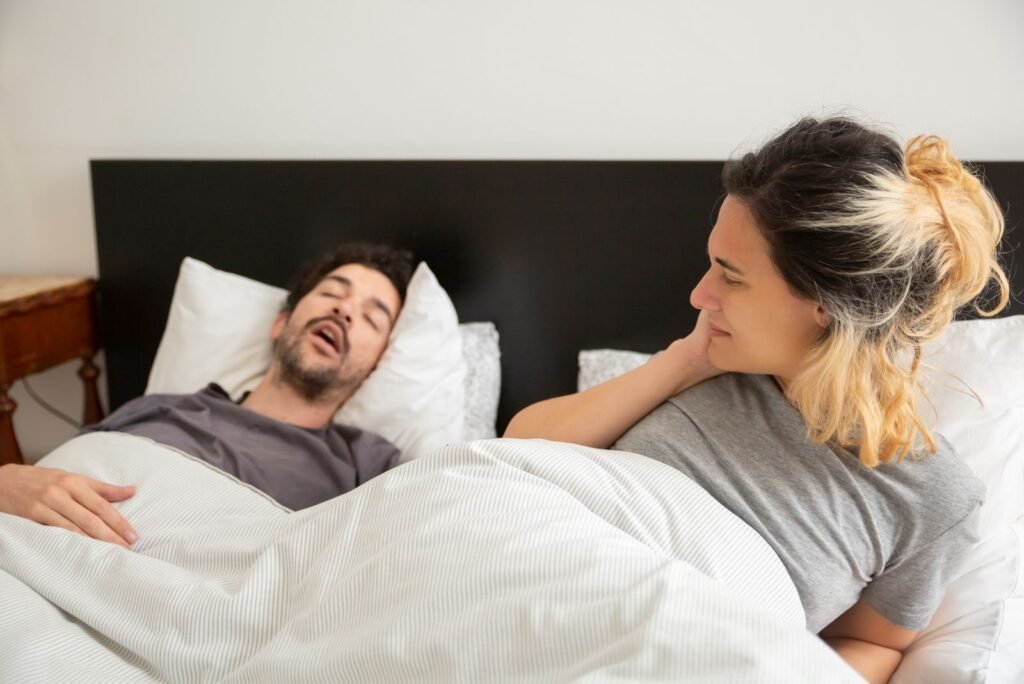
If you’re a man over 40 and you keep waking up exhausted, it’s easy to call it insomnia. But is it insomnia or sleep apnea? Sometimes the problem is not just “trouble sleeping.” It may be breathing disruption during sleep, or a mix of insomnia and obstructive sleep apnea.
Medical disclaimer: This article is for educational purposes only and is not medical advice. It cannot tell you whether you have insomnia, sleep apnea, or another condition. If you have loud snoring, witnessed breathing pauses, gasping, major daytime sleepiness, or concerns about your blood pressure or heart health, talk with a licensed healthcare professional or sleep specialist. If you have chest pain or trouble breathing, call 911.
Affiliate Disclosure: This post may contain affiliate links. If you purchase through our links, we may earn a small commission at no extra cost to you. See our Affiliate Disclosure page for details.
The goal here is simple: help you spot the patterns that make sleep apnea more likely, understand how it can overlap with insomnia, and know when a sleep evaluation is a smarter next step than another supplement, gadget, or late-night routine change.
If you want a simple routine to use while you sort this out, jump to the Evening Reset Checklist at the end. Just don’t use a routine as a substitute for getting evaluated when the apnea signs are strong.
Insomnia or sleep apnea: the quick difference
Insomnia means you have trouble falling asleep, staying asleep, or you wake too early, even when you had a reasonable chance to sleep, and it affects how you feel or function the next day. When it happens at least three nights a week for three months or longer, clinicians call it chronic insomnia. The main complaint is often time awake in bed, racing thoughts, stress, or frustration that sleep won’t come.
Obstructive sleep apnea (OSA) is different. The upper airway repeatedly narrows or closes during sleep, which interrupts breathing and breaks up sleep. You may not remember it happening. Instead, you might notice loud snoring, gasping, morning headaches, dry mouth, repeated awakenings, or feeling unrested after what looked like a full night in bed.
That last detail matters. A man can spend seven or eight hours in bed and still wake up feeling like he barely slept if his breathing kept fragmenting the night.
Why men over 40 should take the overlap seriously
According to the National Heart, Lung, and Blood Institute (NHLBI), the risk of sleep apnea rises with age, and men are more likely than women to have serious sleep apnea. Other risk factors include excess weight, a larger neck or narrow airway, smoking, and alcohol, which relaxes the muscles of the mouth and throat. Frequent loud snoring is also more common in men.
The relationship with blood pressure runs the other way, too: untreated sleep apnea is linked with high blood pressure. So if your blood pressure is creeping up and your sleep feels broken, the “it’s just insomnia” assumption gets less safe.
This doesn’t mean every tired man over 40 has sleep apnea. It does mean that stubborn sleep problems deserve a broader look, especially when they come with breathing clues or next-day impairment.
Signs your “insomnia” may be sleep apnea
One clue by itself doesn’t prove anything. A pattern is what matters. Pay attention if several of these are familiar:
- Loud, frequent snoring, especially if a partner says it’s disruptive or getting worse.
- Observed pauses in breathing during sleep, even if you don’t remember them.
- Waking up choking, snorting, or gasping for air.
- Dry mouth in the morning, especially when paired with snoring.
- Morning headaches.
- Daytime sleepiness, fatigue, or dozing off during quiet moments.
- Waking often at night to urinate.
- High blood pressure, especially if it’s rising or hard to control.
- A larger neck size or weight gain, especially around the torso.
- Waking up many times without a clear reason.
- Non-restorative sleep, where you were in bed long enough but still wake up drained.
The most important clues are the ones someone else sees or hears: loud snoring, breathing pauses, and gasping. Many people with sleep apnea aren’t aware of what happens while they sleep.
Signs that point more toward insomnia
Insomnia is more likely when the main pattern is being awake and alert in bed, not breathing disruption. Common clues include a busy mind, clock-watching, stress about not sleeping, taking a long time to fall asleep, waking too early and not getting back to sleep, or sleeping better away from your normal work stress. If that sounds familiar, you may also relate to feeling wired but tired at night, or to the nighttime signs of high cortisol.
But this is where men get caught. You can have insomnia symptoms and still have sleep apnea. If you wake up over and over because your breathing is disrupted, it can feel like insomnia from the inside. The same goes for waking up at 3 AM night after night.
What COMISA means in plain English
COMISA stands for comorbid insomnia and sleep apnea. In plain English, both problems show up in the same person. You may have trouble falling asleep because your nervous system feels wired, then have fragmented sleep later because your breathing keeps getting disrupted.
This overlap is common. A 2019 research review in Brain Sciences reported that about a third of people with insomnia showed signs of sleep apnea on sleep testing, and a similar share of people with sleep apnea met criteria for insomnia.
It’s also confusing. A man may describe the whole thing as “insomnia,” while his partner notices snoring and breathing pauses. Or he may blame stress, caffeine, or age while missing the breathing pattern that keeps breaking up his sleep.
Treatment depends on what’s actually going on. The American Academy of Sleep Medicine (AASM) strongly recommends cognitive behavioral therapy for insomnia (CBT-I) for chronic insomnia, while sleep apnea is usually treated with options like CPAP. When both are present, researchers suggest clinicians address both, which is one more reason to get properly evaluated instead of guessing.
The practical takeaway: if insomnia advice hasn’t helped and you also have snoring, gasping, witnessed pauses, high blood pressure, or strong daytime sleepiness, ask about a sleep evaluation instead of endlessly adding new sleep hacks.
A simple self-check before you talk with a clinician
For the next few nights, write down what you can observe without obsessing over sleep. Note your bedtime, wake time, alcohol, late meals, nighttime awakenings, bathroom trips, morning dry mouth or headache, and how alert you feel the next day. If you share a bed, ask your partner whether they notice loud snoring, pauses, choking, or gasping.
You can also record audio for a night if that feels reasonable. A recording is not a medical test, but it may help you describe the pattern more clearly during an appointment.
Don’t use an online quiz or smartwatch score as a final answer. The AASM diagnostic guideline says clinical tools, questionnaires, and prediction algorithms should not be used on their own to diagnose obstructive sleep apnea. Diagnosis requires a sleep study: an in-lab polysomnogram or, for many adults with uncomplicated symptoms, a home sleep apnea test.
When to seek medical evaluation
Talk with a healthcare professional or sleep specialist if you have loud snoring plus any of the following: witnessed breathing pauses, gasping or choking, strong daytime sleepiness, morning headaches, dry mouth, high blood pressure, concerns about an irregular heartbeat, or sleep that never feels restorative. It’s also worth a visit if insomnia has lasted for months despite good habits.
Call 911 or seek emergency care right away for chest pain, severe shortness of breath, fainting, sudden weakness, numbness, or trouble speaking. If you feel dangerously sleepy while driving or operating equipment, stop and get help. That’s not a willpower problem.
What to try tonight while you arrange the right next step
These steps are practical and focused on reducing avoidable sleep disruption. They are not a replacement for a sleep apnea evaluation when the signs are present.
- Skip alcohol close to bed. Alcohol relaxes throat muscles and can fragment sleep and worsen snoring.
- Ask before using sleeping pills or sedatives. Some medicines, such as sedatives and certain prescription painkillers, can make breathing harder in people with sleep apnea. If apnea is a possibility, check with your clinician first.
- Avoid heavy late meals. Give your body time to digest before lying down.
- Sleep on your side if back-sleeping worsens snoring. It’s not a fix, but some people snore less on their side.
- Keep the bedroom cool, dark, and quiet. Remove obvious sleep disruptors before blaming your body.
- Do a short wind-down, not a marathon routine. Five quiet minutes of dim lights, phone away, and slow breathing is enough to start. For more ideas, see our evening routine to lower cortisol naturally.
- Write down the pattern. Bring real notes to your clinician instead of trying to remember everything later.
If this turns into another complicated nighttime project, it can backfire. Keep it simple. The point is to reduce friction tonight and gather better information, not to perfect your sleep in one evening.
Where supplements fit, and where they don’t
Supplements are not the first step when there are signs of sleep apnea. If you snore loudly, stop breathing during sleep, gasp awake, or feel dangerously sleepy during the day, the smarter move is a medical evaluation. No supplement can tell you whether your airway is closing during sleep, and none treats sleep apnea.
That said, some men use evening supplements as secondary support for winding down, stress, or a calmer routine when the main issue appears to be mild, stress-related sleep disruption. That’s a different situation from suspected apnea. If you take medications, have a medical condition, or are already being evaluated for sleep issues, check with your clinician before adding anything new.
If that describes you, CortiSync is the stress-support supplement we cover on Evening Reset. Use it only in the right context: as part of a simple evening routine, not as a way to ignore apnea warning signs.
Bottom line for men over 40
If your main problem is lying awake with a racing mind, insomnia strategies (especially CBT-I) may help. If your nights include loud snoring, witnessed breathing pauses, gasping, dry mouth, morning headaches, high blood pressure, or heavy daytime sleepiness, don’t assume it’s “just insomnia.”
The safest next step is to bring the pattern to a healthcare professional or sleep specialist. You’re not trying to label yourself. You’re trying to stop guessing.
Get the free Evening Reset Checklist: a simple 5-minute evening routine you can print and start using tonight.
References
- Kapur VK, Auckley DH, Chowdhuri S, et al. (2017). Clinical Practice Guideline for Diagnostic Testing for Adult Obstructive Sleep Apnea. Journal of Clinical Sleep Medicine, 13(3), 479–504.
- Edinger JD, Arnedt JT, Bertisch SM, et al. (2021). Behavioral and Psychological Treatments for Chronic Insomnia Disorder in Adults: An American Academy of Sleep Medicine Clinical Practice Guideline. Journal of Clinical Sleep Medicine, 17(2), 255–262.
- Sweetman A, Lack L, Bastien C. (2019). Co-Morbid Insomnia and Sleep Apnea (COMISA): Prevalence, Consequences, Methodological Considerations, and Recent Randomized Controlled Trials. Brain Sciences, 9(12), 371.
- National Heart, Lung, and Blood Institute (NHLBI). Sleep Apnea: Symptoms and Causes and Risk Factors.
- Mayo Clinic. Obstructive Sleep Apnea: Symptoms and Causes.
- MedlinePlus. Sleep Apnea. U.S. National Library of Medicine.
Pingback: Are Sleep Trackers Accurate? What Your Score Means
Pingback: Restless Legs vs. Leg Cramps at Night: 5 Clues