Medical disclaimer: This article is for educational purposes only and does not replace medical advice, diagnosis, or treatment. If your sleep problems are severe, new, or getting worse, or come with breathing pauses, choking, low mood, or extreme daytime sleepiness, talk with a qualified healthcare professional. If you have chest pain or trouble breathing, call 911.
Affiliate Disclosure: This post may contain affiliate links. If you purchase through our links, we may earn a small commission at no extra cost to you. See our Affiliate Disclosure page for details.
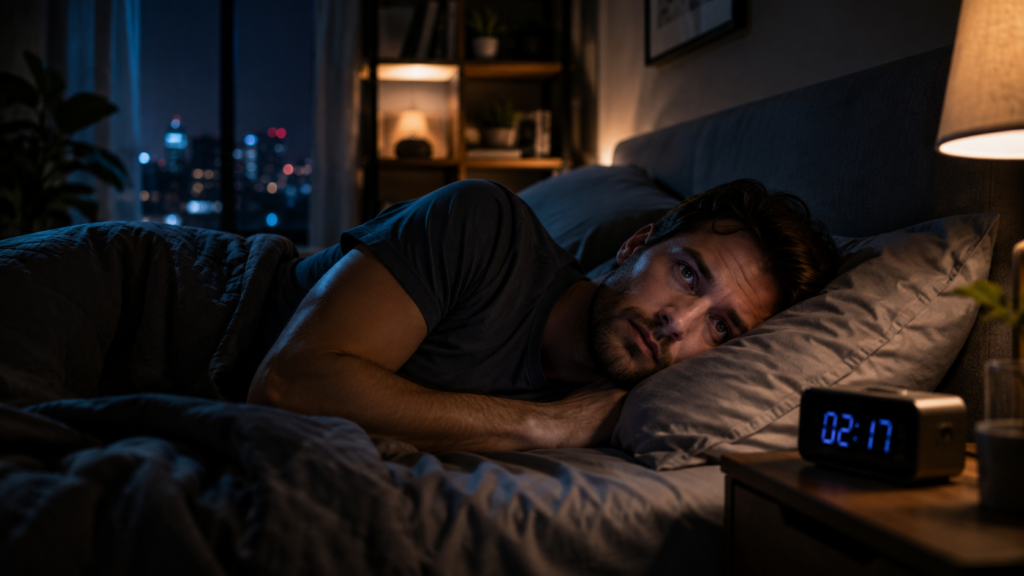
You fall asleep fine. Then, almost like clockwork, you wake up around 3 AM. The room is quiet, your body is tired, but your brain is suddenly online. You check the time, get frustrated, and start calculating how many hours are left before morning.
For men over 40, this pattern is common, and stress or cortisol usually gets the blame. Stress can be part of the picture. But middle-of-the-night wakeups can also come from alcohol, bathroom trips, breathing problems, blood sugar swings, body temperature, medications, pain, or a routine that trains your brain to wake up at the same time every night.
So instead of asking “Why 3 AM?”, ask this: what is making my sleep lighter in the second half of the night?
Key takeaways
- Sleep gets lighter after midnight, so small triggers are more likely to wake you around 3 AM.
- Common causes in men over 40 include alcohol, nighttime bathroom trips, sleep apnea, stress, late meals, a warm or bright room, pain, and medications.
- Loud snoring, gasping, or several bathroom trips a night are reasons to see a doctor before trying supplements.
- A simple 7-night log is the fastest way to find your pattern.
Why 3 AM Wakeups Feel So Specific
Sleep is not one long, even block. You cycle through lighter sleep, deep sleep, and REM sleep several times a night. Deep sleep is concentrated in the first half of the night. As the night goes on, you spend more time in lighter sleep, which makes it easier to wake up.
That means a trigger you’d sleep through at midnight can wake you at 3 AM. A full bladder, a warm room, alcohol wearing off, snoring, or a stressful thought may not be enough to wake you from deep sleep. Later in the night, the same trigger can pull you fully awake.
This is why so many men say, “I can fall asleep, but I can’t stay asleep.” Doctors call this sleep-maintenance insomnia. Knocking yourself out harder won’t fix it. Finding what breaks up your sleep after midnight will.
1. Alcohol Helps You Fall Asleep, Then Breaks Up the Second Half of the Night
A nightcap can feel like it works because alcohol makes you drowsy. The trouble comes later. As your body processes the alcohol, sleep in the second half of the night tends to get lighter and more fragmented. Alcohol also relaxes the throat muscles, which can make snoring and sleep apnea worse.
For men over 40, this is one of the most overlooked 3 AM triggers because the cause and the wakeup feel unrelated. You had the drink at 7 or 8 PM. The wakeup shows up at 2 or 3 AM.
What to try: For seven nights, skip alcohol within four hours of bedtime and note whether the 3 AM wakeups change. One night won’t tell you much. Look for the pattern.
2. Nighttime Bathroom Trips (Nocturia)
Getting up to pee once in a while is normal. If it happens most nights, especially more than once a night, it’s worth paying attention to. Possible causes include drinking late in the evening, alcohol, caffeine, certain medications such as diuretics, an enlarged prostate, diabetes, and sleep apnea.
There’s also a twist: sometimes your bladder isn’t what woke you. Your sleep is light or disrupted, you wake up, and then you notice you could pee, so it feels like the bladder caused the wakeup. That distinction matters because the fix may not be “drink less water.” It may be better sleep quality or checking for breathing problems.
What to track: your last drink of the evening, alcohol and caffeine intake, how many bathroom trips you make, and whether you wake up with real urgency or just go because you’re already awake.
3. Sleep Apnea Can Look Like Insomnia
Not every 3 AM wakeup is about stress. Obstructive sleep apnea causes repeated pauses or drops in breathing during sleep. It’s linked with nighttime awakenings, loud snoring, morning headaches, dry mouth, high blood pressure, and daytime fatigue, and it can add to nighttime bathroom trips.
Men are two to three times more likely than premenopausal women to have sleep apnea, and risk rises with age and excess weight. The tricky part is that you may not remember choking or gasping. You may only know that you wake up a lot and never feel rested.
Red flags to take seriously: loud snoring, breathing pauses someone else has noticed, waking up gasping or choking, morning headaches, high blood pressure, heavy daytime sleepiness, or getting up to pee several times a night. If these sound familiar, see your doctor before you try supplements. Sleep apnea is diagnosed with a sleep study, and effective treatments are available.
4. Stress and Cortisol Can Keep Your Brain on Alert
Stress still matters. When your nervous system stays on high alert into the evening, your brain can react more strongly to the brief awakenings everyone has at night. Instead of waking for a moment and drifting back off, you wake up and start thinking.
This is where cortisol comes up online, and it’s often oversimplified. Cortisol naturally starts rising in the last hours of sleep and peaks around the time you wake up. That doesn’t mean every 3 AM wakeup is a “cortisol spike.” For many men, the bigger issue is hyperarousal: the brain has learned to treat waking up at night as a problem to solve.
If your first thought is “Not again,” that stress response can stretch a short wakeup into an hour. The clock becomes a threat. Tomorrow’s fatigue becomes the story. Now your body has a reason to stay alert.
If evening stress and racing thoughts sound familiar, see our guide to high cortisol symptoms at night. If your main issue is feeling exhausted but unable to switch off, read Why Do I Feel Wired But Tired at Night?
Some men also add an adaptogen supplement to their wind-down routine. CortiSync contains ashwagandha and other herbs that have been studied for stress support. It’s not a sleep medication, and it won’t fix sleep apnea, bladder problems, or medication side effects. Talk with your doctor before starting any supplement, especially if you take prescription medication or have a thyroid condition. (Affiliate link.)
5. Blood Sugar Swings Can Disrupt Sleep
Large late meals, high-sugar snacks, or going to bed hungry can backfire for some people. In people with diabetes, especially those on insulin or certain other diabetes medications, blood sugar that drops too low overnight can cause sweating, nightmares, and sudden awakenings. For others the evidence is less clear, but heavy, sugary, or very late meals are worth testing as a trigger.
You don’t need a complicated diet plan. Start with the basics: skip heavy meals right before bed, go easy on late sugar, and eat a balanced dinner with protein, fiber, and slow-digesting carbs. If you have diabetes or prediabetes, or you notice night sweats, shakiness, or frequent urination, bring it up with your doctor.
6. Temperature, Light, and Noise Matter More Later in the Night
Because sleep is lighter in the second half of the night, small things in your environment can have a bigger effect. A room that is slightly too warm, early morning light, a partner moving, a pet, a phone notification, or traffic noise may wake you more easily at 3 AM than at 11 PM.
Simple fixes: keep the room cool, make it as dark as you can, silence phone notifications, and don’t check the time when you wake up. Clock-checking teaches your brain to link the wakeup with stress.
7. Pain, Medications, and Other Changes After 40
After 40, sleep can get more sensitive to things you used to tolerate: late workouts, joint pain, acid reflux, medications, nicotine, caffeine, and an irregular bedtime. Some medications can affect sleep or make you urinate more at night. Pain can also wake you during lighter sleep, even if it doesn’t bother you much during the day.
If the wakeups started after a new medication, a dose change, a new supplement, a new workout schedule, or new pain, pay attention to the timing. Ask your doctor or pharmacist whether sleep disruption is a known side effect, and don’t stop a prescribed medication on your own.
What to Do When You Wake Up at 3 AM
Fighting the wakeup usually backfires, because it tells your nervous system that something is wrong. Try this instead:
- Don’t check the time if you can avoid it.
- Keep the lights low.
- Try slow breathing, a boring mental task, or a body scan.
- If you’ve been wide awake for what feels like 15 to 20 minutes, get out of bed and do something quiet in dim light until you feel sleepy.
- Don’t scroll your phone. Bright light and stimulation make the wakeup stick.
The goal is to teach your brain that waking up briefly is not an emergency. Getting out of bed when you can’t sleep is a core technique in cognitive behavioral therapy for insomnia (CBT-I), a well-studied, drug-free treatment.
The 7-Night Wakeup Log
If you want to find the real cause, track it for one week. Don’t rely on memory. Write down:
- Bedtime and wake time
- Alcohol, caffeine, and late food
- Bathroom trips
- Snoring, gasping, dry mouth, or morning headache
- Room temperature and light
- Your stress level that evening
- Whether you checked the clock or your phone
Patterns often show up within a week. If alcohol nights, late meals, or stressful evenings line up with the wakeups, you have a starting point. If bathroom trips, snoring, gasping, or severe fatigue keep showing up, talk with your doctor.
Want a simple routine to pair with your log? Get the free Evening Reset Checklist at the end of this article.
When to Talk to a Doctor
See a doctor if you wake up at 3 AM most nights for several weeks, or if you:
- Feel too sleepy to drive safely
- Snore loudly or wake up gasping or choking
- Have frequent morning headaches
- Get up to urinate more than once a night on most nights
- Notice your mood getting worse
If you have chest pain, shortness of breath, or other emergency symptoms, call 911.
Sleep problems are common, but common doesn’t mean harmless. The right next step depends on the cause.
Frequently Asked Questions
Is waking up at 3 AM a sign of high cortisol?
Not necessarily. Cortisol naturally begins to rise in the early morning hours, and stress can make you more likely to wake up and stay awake. But alcohol, bathroom trips, sleep apnea, and your sleep environment are just as likely to be involved. A one-week log is a better starting point than assuming the cause is hormonal.
Is it normal to wake up at night after 40?
Brief awakenings are normal at any age, and sleep tends to get lighter as we get older. It becomes a problem when you can’t fall back asleep, it happens most nights, or you feel tired during the day.
Should I take something to help me stay asleep?
Talk with your doctor first, especially if you have red flags like loud snoring, gasping, or frequent bathroom trips. Sleep aids and supplements can mask a problem like sleep apnea instead of treating it.
The Bottom Line
If you’re a man over 40 waking up at 3 AM, don’t assume it’s just stress. Stress may be one piece, but the bigger picture is often fragmented sleep in the second half of the night.
Start with the obvious levers: alcohol timing, bathroom patterns, breathing red flags, caffeine, late meals, room temperature, and how you respond when you wake up. Track seven nights. Then fix the pattern you actually see.
For a practical next step, read Evening Routine to Lower Cortisol Naturally. Use it as a wind-down framework, not as a replacement for medical care when red flags are present.
References
- Sleep Foundation: Why Do I Wake Up at 3 AM?
- Sleep Foundation: Alcohol and Sleep
- Sleep Foundation: Cognitive Behavioral Therapy for Insomnia (CBT-I)
- Sleep Foundation: Diabetes and Sleep
- National Institute on Aging: Sleep and Older Adults
- Mayo Clinic: Insomnia Symptoms and Causes
- Mayo Clinic: Obstructive Sleep Apnea Symptoms and Causes
- Mayo Clinic Press: 7 Signs You Might Have Sleep Apnea
- Cleveland Clinic: Nocturia
- StatPearls (NCBI): Physiology, Cortisol
Get the free Evening Reset Checklist: a simple 5-minute evening routine you can print and start using tonight.
Pingback: Nocturia vs. Insomnia: Why You Keep Waking Up to Pee at Night - Evening Reset
Pingback: Are Sleep Trackers Accurate? What Your Score Means
Pingback: Is It Insomnia or Sleep Apnea? Signs Men Over 40 Shouldn’t Ignore - Evening Reset
Pingback: Do Naps Affect Sleep at Night? Guide for Men 40+
Pingback: Does Morning Sunlight Help You Sleep at Night? A Practical Guide for Men Over 40 - Evening Reset